In the realm of automotive physics, the top speed, horsepower, and acceleration capabilities of an engine are absolutely useless if you do not possess the mechanical ability to control that kinetic energy and bring the vehicle to a halt safely and precisely. Driving on the roads of Puerto Rico is a true test of driver skill and, more importantly, an extreme endurance test for your vehicle’s safety components. From the flat coastal plains of Carolina to the highest peaks of Jayuya, every mile demands peak performance from your braking system.
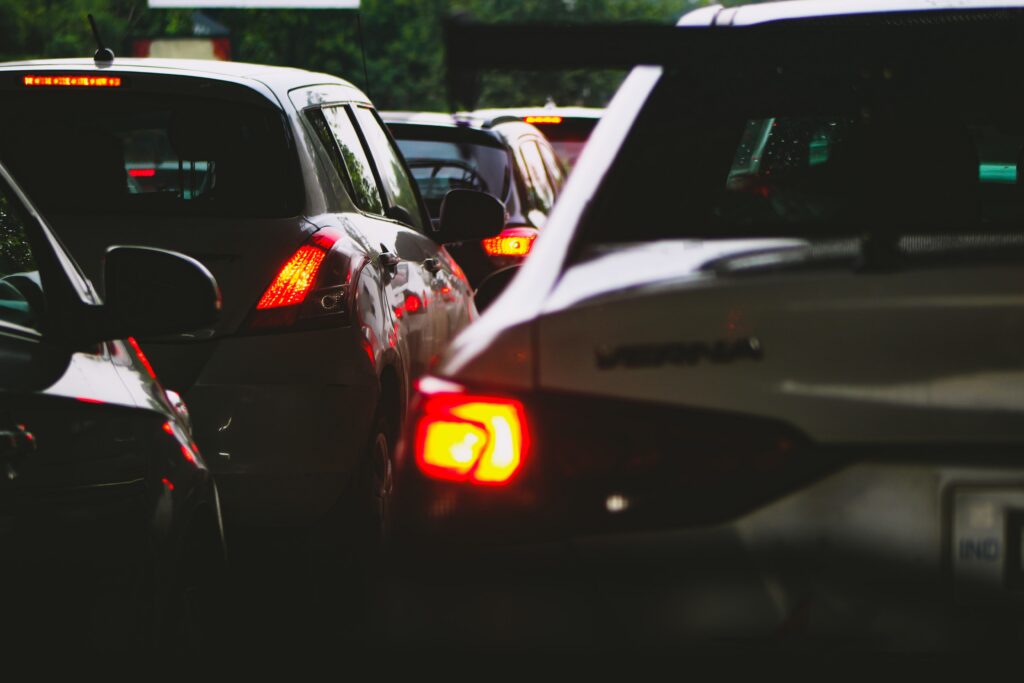
The sudden, torrential tropical rains that leave the asphalt incredibly slippery, the unexpected traffic jams that force you to brake hard on Expreso Las Américas, the thousands of deep potholes in our rural sectors, and the winding, steep routes of our mountainous central region (Cordillera Central) subject your brakes to brutal friction and sky-high temperatures. This is not mere hyperbole; it is the daily reality for every Puerto Rican driver. In the auto parts industry, the braking system falls directly into the “Life or Death” category. Compromising on quality in this vital area is not just risking costly mechanical breakdowns; it is playing Russian roulette with your life, your family’s safety, and the well-being of other drivers on the road.
As the largest, most experienced, and highly respected auto parts chain in Puerto Rico, Centropiezas Plus has written this exhaustive guide so you can learn to interpret your car’s warning signs, understand the engineering behind different friction compounds, and choose wisely from the vast supply of brake pads available on the island. We believe an informed driver is a safe driver.
How Do You Know if Your Car Needs New Brake Pads?
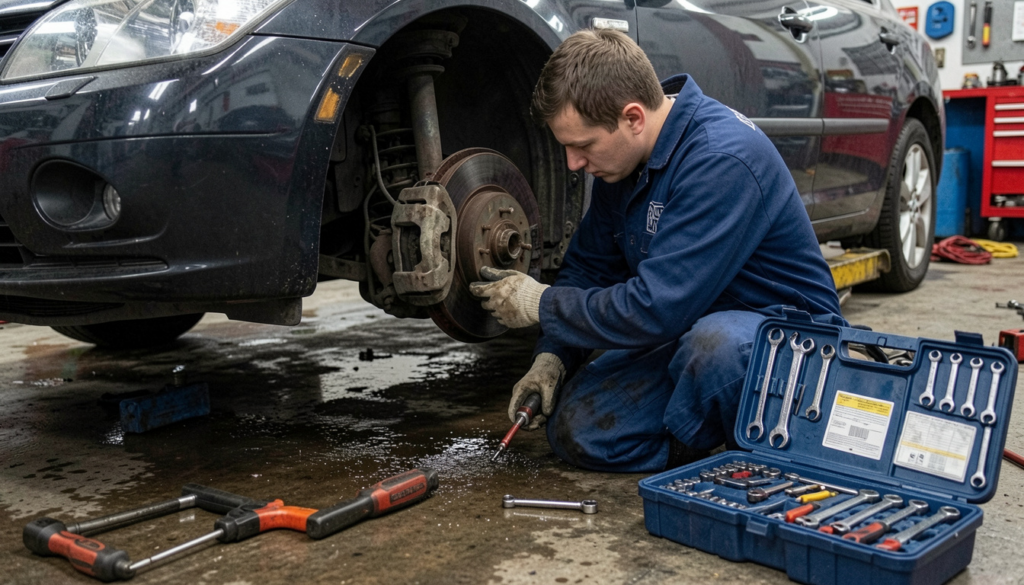
One of the most common mistakes drivers in Puerto Rico make is waiting until the brakes fail completely, or until the steering wheel shakes uncontrollably, before visiting the mechanic. The disc brake system—composed primarily of the brake caliper, the rotor (disc), and the brake pads—is expertly engineered by manufacturers to emit audible and tactile warning signals long before a catastrophic failure occurs. Recognizing these early warning signs can save you thousands of dollars in repairs and, more importantly, prevent life-threatening accidents on our unpredictable roads. Below, we detail the clinical symptoms that you must absolutely not ignore under any circumstances.
The Metallic Squeal: What Exactly Does That Noise Mean When Braking?
The most frequent symptom, and simultaneously the most frustrating to the ear, is a high-pitched, constant, and piercing squeal that occurs the exact moment you step on the brake pedal. Many drivers mistakenly believe this is a factory defect or simply “dust” in the system, but it is actually an intentional, built-in safety measure. The vast majority of modern brake pads are manufactured with an “acoustic wear indicator,” which is a small, soft metal tab incorporated into the base of the pad.
As the friction material (the layer composed of ceramic or metal compounds that actually bites down on the rotor) wears away over months of use until it reaches a critical safety level (generally 2 to 3 millimeters of remaining thickness), that metal tab becomes exposed and begins to rub against the spinning brake rotor. That specific metal-on-metal friction generates the famous metallic squeal. It is, quite literally, your car’s system screaming at you to change the pads immediately.
If you choose to simply turn up the radio volume and ignore this acoustic warning, the remaining friction material will completely disintegrate within a few days. Once that happens, the solid steel backing plate of the pad will grind directly against the rotor. This causes a deep, harsh “grinding” noise that will not only leave you with virtually zero braking power but will irreversibly ruin the rotor. This negligence forces you to buy brand-new discs, effectively doubling or tripling your repair bill at the mechanic shop. In the humid environment of Puerto Rico, this grinding can also lead to premature oxidation and structural weakness in the caliper assembly.
Steering Wheel Vibration and a “Spongy” Brake Pedal
Friction is the physical principle that stops your car, transforming the kinetic energy of movement into massive amounts of thermal energy (heat). Sometimes, that heat fails to dissipate correctly due to the high ambient temperatures of our island. If, while applying the brakes traveling down a steep hill in Cayey or braking abruptly on Expreso Las Américas, you feel the steering wheel vibrating violently in your hands, or the brake pedal pulsating strongly against the sole of your shoe, you have a severe thermal issue.
This vibration strongly indicates that the brake rotors have become warped and distorted by excessive heat, or that the previous brake pads were of such poor quality that they literally melted, leaving uneven patches of crystallized friction material baked onto the metal of the disc. This phenomenon, known as “judder,” compromises the contact patch between the pad and the rotor, leading to inconsistent braking and potential loss of control during emergency maneuvers.
Engineering Warning: If you step on the brake and the pedal feels “spongy,” lacking firmness, and sinks all the way to the floor with little resistance, it means there is air trapped in the hydraulic lines or that the brake fluid has reached its boiling point. This is an unequivocal sign that your worn-out pads are no longer insulating heat properly, transferring extreme temperatures directly to the fluid and causing a hydraulic failure. In the coastal areas of Puerto Rico, moisture absorption in the brake fluid (hygroscopy) accelerates this dangerous process.
Material Comparison: Ceramic or Semi-Metallic Brake Pads?
When you arrive at the counters of any of our 30+ Centropiezas Plus stores, one of our expert advisors will ask you a key question: “What type of brake pads do you prefer?” The choice between ceramic and semi-metallic compounds is not a matter of aesthetics or price alone; it depends strictly on your type of vehicle and your regular driving routes within Puerto Rico’s highly varied geography. Understanding the molecular science of these materials will help you make the safest choice for your specific needs.
| Technical Feature / Benefit | Ceramic Brake Pads | Semi-Metallic Brake Pads |
|---|---|---|
| Chemical Composition | Dense ceramic fibers, polymers, and fine embedded copper filaments for thermal conductivity. | Steel wool, sintered iron, copper, and graphite-based lubricants for high-friction grip. |
| Noise Generation (NVH) | Exceptionally low. They operate outside the audible human frequency for a silent ride. | Moderate to high. May emit slight squeals or groans depending on morning temperatures. |
| Brake Dust (Wheels) | Minimal. Produces a light-colored, very fine, non-sticky dust that washes off effortlessly. | High. Generates dark, magnetic, sticky dust that requires heavy chemicals to clean off. |
| Heat Dissipation | Excellent for urban driving. Dissipates heat quickly in short, repetitive stops. | Superior under extreme stress. Designed not to suffer brake fade under heavy loads. |
| Rotor (Disc) Wear | Very gentle and forgiving. Significantly prolongs the operational life of the brake rotor. | Highly abrasive. Requires replacing or resurfacing (turning) the disc more frequently. |
| Recommended Application | Compact sedans (Corolla, Yaris, Civic), urban SUVs, and high-end luxury vehicles. | Cargo/towing trucks (F-150, Tacoma, Transit) and constant driving in mountain zones. |
Why Ceramic Pads are Ideal for San Juan and Bayamón Traffic
Ceramic brake pads represent the pinnacle of modern friction technology for the average consumer. If you live and work in the San Juan metropolitan area of Puerto Rico, where daily driving is characterized by stopping and starting every few feet (stop-and-go traffic), the ceramic pad is undoubtedly your best investment. They provide a firm, linear, and highly predictable braking feel that does not require the brakes to be “pre-warmed” to function at 100% capacity. This consistency is vital when navigating the chaotic morning commute through Guaynabo or Caguas.
Furthermore, their greatest appeal for the demanding local driver is aesthetic cleanliness. We know how much Puerto Ricans value the appearance of their vehicles. If you have invested hundreds or even thousands of dollars in luxury aluminum or magnesium alloy wheels for your car, ceramic pads will prevent them from being stained and corroded by the damaging black carbon dust characteristic of conventional brakes. Over time, this dust can pit the finish of your wheels; ceramic pads mitigate this risk almost entirely.
The Advantages of Semi-Metallic Brakes for Cargo Trucks and Mountainous Areas
Do not let the silence and cleanliness of ceramic pads deceive you; when it comes to stopping massive amounts of weight or navigating the vertical terrain of Puerto Rico, the semi-metallic pad remains the undisputed king of brute force. If you drive a commercial cargo vehicle, tow a boat to the coast on weekends, or live in high-altitude municipalities like Utuado, Orocovis, or Adjuntas, the steep and prolonged downhill roads will force you to ride your brakes continuously for several minutes. This heats the steel rotors until they are glowing red, a condition that would melt many standard ceramic pads.
The semi-metallic pad, being manufactured with up to 60% pure metal, possesses a massive thermal transfer rate. It “bites” the brake rotor with an aggressive mechanical grip that ceramic material simply cannot withstand under heavy loads. More importantly, it is virtually invulnerable to the dreaded brake fade—the total loss of braking capacity due to the material’s crystallization from excess heat. For heavy-duty work and mountain driving, sacrificing clean wheels for aggressive semi-metallic power is the safest and most responsible decision a driver can make.
The Cost of Safety: How Much Do Brake Pads Cost in Puerto Rico?
One of the main mistakes drivers make on the island is delaying brake maintenance under the assumption that it will be an investment that derails their monthly budget. The astonishing reality is that brake pads, in direct proportion to their vital importance for your survival on the road, are remarkably inexpensive replacement parts. At Centropiezas Plus, we strive to keep high-quality safety accessible to every citizen.
Factors influencing the final price include brand reputation, chemical formulation, and durability ratings. In the vaults of Centropiezas Plus, we manage a highly diverse inventory meticulously adjusted to fit all budgets, always guaranteeing safety across all our price tiers. Generally, a set of front brake pads (which handle up to 75% of the inertia force when braking) can typically range between $30.00 and $85.00 dollars. This small investment secures your peace of mind for the next year or two of driving.
The price varies based on logical manufacturing factors: Premium-grade ceramic pads, due to their highly complex manufacturing processes, are usually slightly more expensive than traditional semi-metallic or organic pads (Non-Asbestos Organic or NAO). We provide excellent generic replacement brands, as well as global industry giants like Wagner, Bosch, or Akebono. Premium brands carry a higher cost because they invest millions in noise-absorption technology and include all the necessary hardware kits (retention clips and high-temperature synthetic grease) in the box for a flawless installation.
Always consider your Return on Investment (ROI): Spending an extra $20 dollars today on high-end ceramic pads will undoubtedly save you from having to buy a brand-new set of $150 rotors next year due to severe abrasive wear. Furthermore, a high-quality pad lasts longer, meaning you pay for labor less often. In the long run, buying the “more expensive” pad is almost always the cheaper option.
Why You Must Never Ignore Brake Wear on the Island’s Roads
From a strict forensic engineering and legal liability perspective, driving with worn brakes in Puerto Rico is not just an oversight; it is reckless negligence. A brake pad with minimal friction material exponentially increases your vehicle’s stopping distance. If you add to this risk equation a slippery asphalt road soaked by a tropical downpour on the Expreso Martínez Nadal, a high-speed rear-end collision becomes practically inevitable. Your ability to react is cut in half when your equipment is failing.
Financially and legally speaking, causing a rear-end collision due to a deficient braking system will make you legally at fault with traffic authorities. This triggers a bureaucratic nightmare: immediate deductible payments, drastic increases in your auto insurance premiums, hefty traffic fines, and the traumatic process of facing potential civil lawsuits for bodily injuries (“whiplash”) from third parties or even your own family members riding in the car. Replacing your brake pads on time is the absolute cheapest life insurance and legal shield you can acquire. Don’t let a $40 part lead to a $40,000 legal battle.
Brake FAQs: Professional Answers for Local Drivers
How long do brake pads last on average in Puerto Rico?
The lifespan is extremely variable and depends entirely on the driver’s habits. An aggressive driver, or someone who drives down the winding Cayey-to-Salinas highway daily, can burn through and destroy a set of brakes in just 25,000 to 30,000 miles. Conversely, a conservative driver who mostly commutes on flat highways without sudden stops, using premium ceramic technology, can easily surpass 50,000 or even 60,000 miles. We strongly advise asking your trusted mechanic to measure the remaining thickness in millimeters every time you rotate your tires or change your engine oil. Never rely on guesswork.
Do I always need to replace the brake rotors when I change the pads?
It is not mechanically mandatory to replace the rotors (discs) every time you change the brake pads, but it is absolutely mandatory to evaluate their tolerance and flatness. If the rotor still has sufficient thickness according to the millimeter specifications engraved by the manufacturer, it must be “resurfaced” or “turned” (taken to a precision automotive lathe). The lathe shaves off a microscopic layer of metal to create a perfectly flat surface where the new pads can properly bed-in. If the rotor has deep grooves, a pronounced rust lip, or is warped by extreme heat, it must go straight to the trash and be replaced with a new one to prevent steering wheel vibrations and brake pedal pulsation.
Do not compromise your vital safety by waiting for replacement parts that take two to three weeks to arrive from overseas. When your brakes give you a warning, time is working against you. At Centropiezas Plus, we offer absolute immediacy. We boast the best-stocked warehouse of friction parts for absolutely every brand on the market: Japanese, American, Korean, and European manufacturers.
We offer the supreme advantage that buying blindly on the internet cannot provide: A robust local warranty, face-to-face human advice from experts who understand our roads, and headache-free returns. Whether you drive a Toyota Corolla, a Ford F-150, or a BMW, we have the exact part you need sitting on our shelf right now.
Don’t Gamble with Your Family’s Lives!
Search your exact license plate online to find your perfect brake pads and pick them up in minutes.
Accelerate with total confidence, because we make sure you can brake on time!